
Imagine standing in a dusty New York subway station in the early eighties. Amidst the grime, a bold white chalk outline of a crawling infant appears on a black poster, the radiant baby, as it radiates energy, stopping commuters in their tracks because it feels both ancient and futuristic.
Whether you are drawn to the energy of the Radiant Baby or the bold lines of the Barking Dog, you can browse the full collection of Keith Haring’s symbolic masterpieces here to find one of Keith Haring Symbols that resonates with your space.
This simple ability to stop time through art transformed how the world viewed public spaces. The artist used these empty advertising panels as a private gallery for the masses. He turned gray commutes into moments of reflection and joy.
At Poppins Shop, we have spent ten years in our Saigon atelier curating Keith Haring prints that carry this pulse. We believe the creator established a revolutionary visual language that changed contemporary art forever. These immediately recognizable graphics are now famous across every continent.
Every bold line vibrates with a message of social change, love, or warning. This guide explores the deep meanings behind the icons keith haring left behind. Our expertise helps you see beyond the canvas to the urgent stories told through art.
Key Takeaways
- Explore the origins of the Radiant Baby and its message of hope.
- Understand how street sketches evolved into global museum masterpieces.
- Learn the social and political meanings behind the barking dog motif.
- Discover how Poppins Shop curates iconic prints with a decade of expertise.
- Analyze the artist’s unique method of communicating complex issues through simple lines.
- Identify the differences between joyful figures and darker symbolic imagery.
Decoding Keith Haring Symbols: A Visual Language for 1980s New York
The vibrant 1980s New York art scene served as the ultimate laboratory for Keith Haring to craft his unique communication style. He moved to the city in 1976 to study at the School of Visual Arts. Soon, he became fascinated by alternative spaces outside of traditional galleries.
He found great inspiration in the energy of contemporaries like Andy Warhol. Haring developed a revolutionary visual language that worked like a universal communication system. This language used symbols instead of words to share complex ideas quickly with a diverse public.
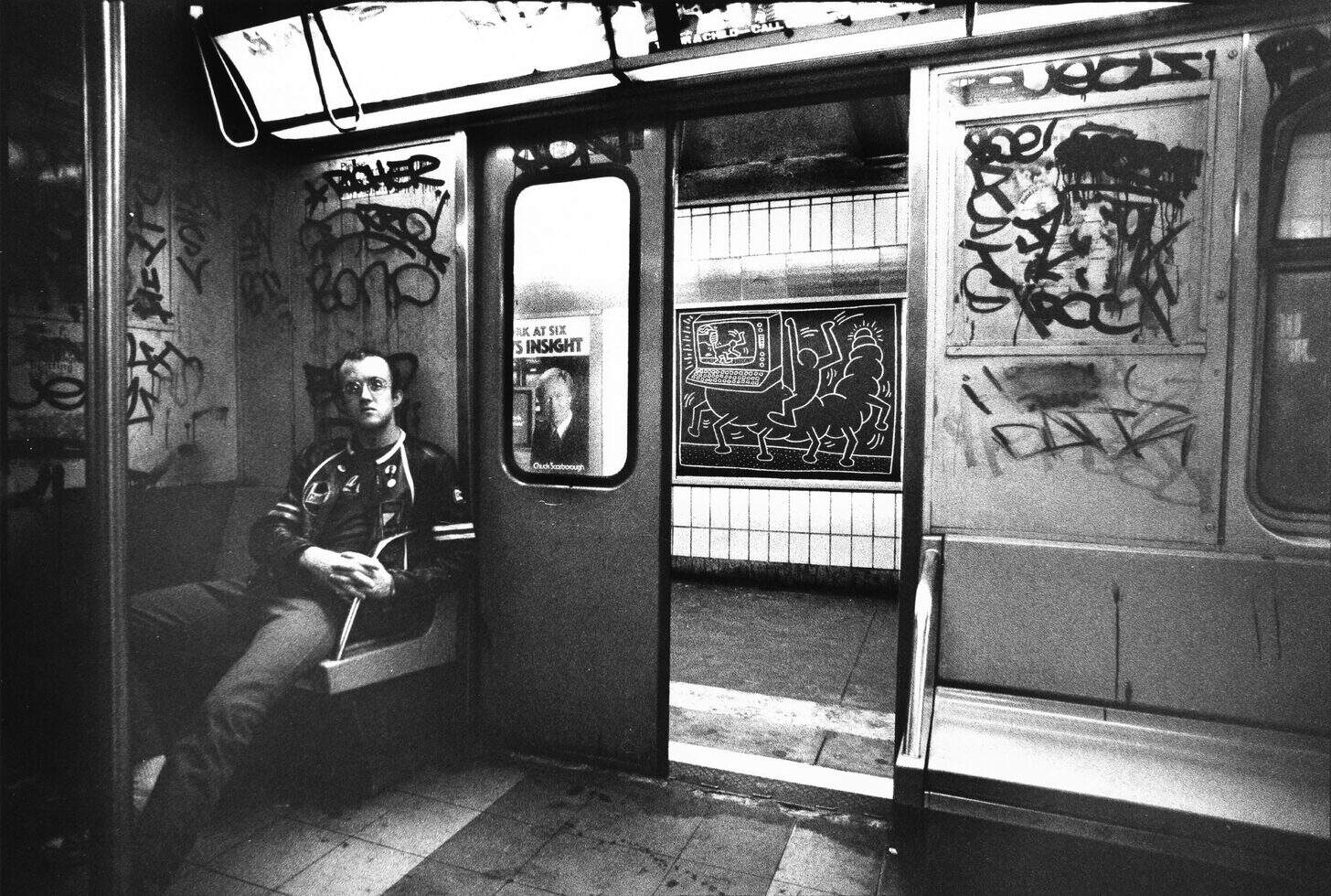
By using the subway as his main canvas, he made art accessible to everyone rather than just elite collectors. He urgently wanted to bridge the gap between high and low culture. His visual language allowed him to communicate across cultural barriers in a cosmopolitan city.
Haring’s revolutionary approach involved several key elements:
- Utilizing the subway system as a democratic gallery for the masses.
- Creating a language of icons that functioned like a universal alphabet.
- Addressing social crises like the 1980s AIDS epidemic through public art.
These drawings became a vital part of the art scene. Keith Haring proved that artists could provide serious social commentary through simple symbols. His work transformed public transit into a scene for shared human experience in 1980s New York.
The Radiant Baby: Hope, Innocence, and the AIDS Epidemic
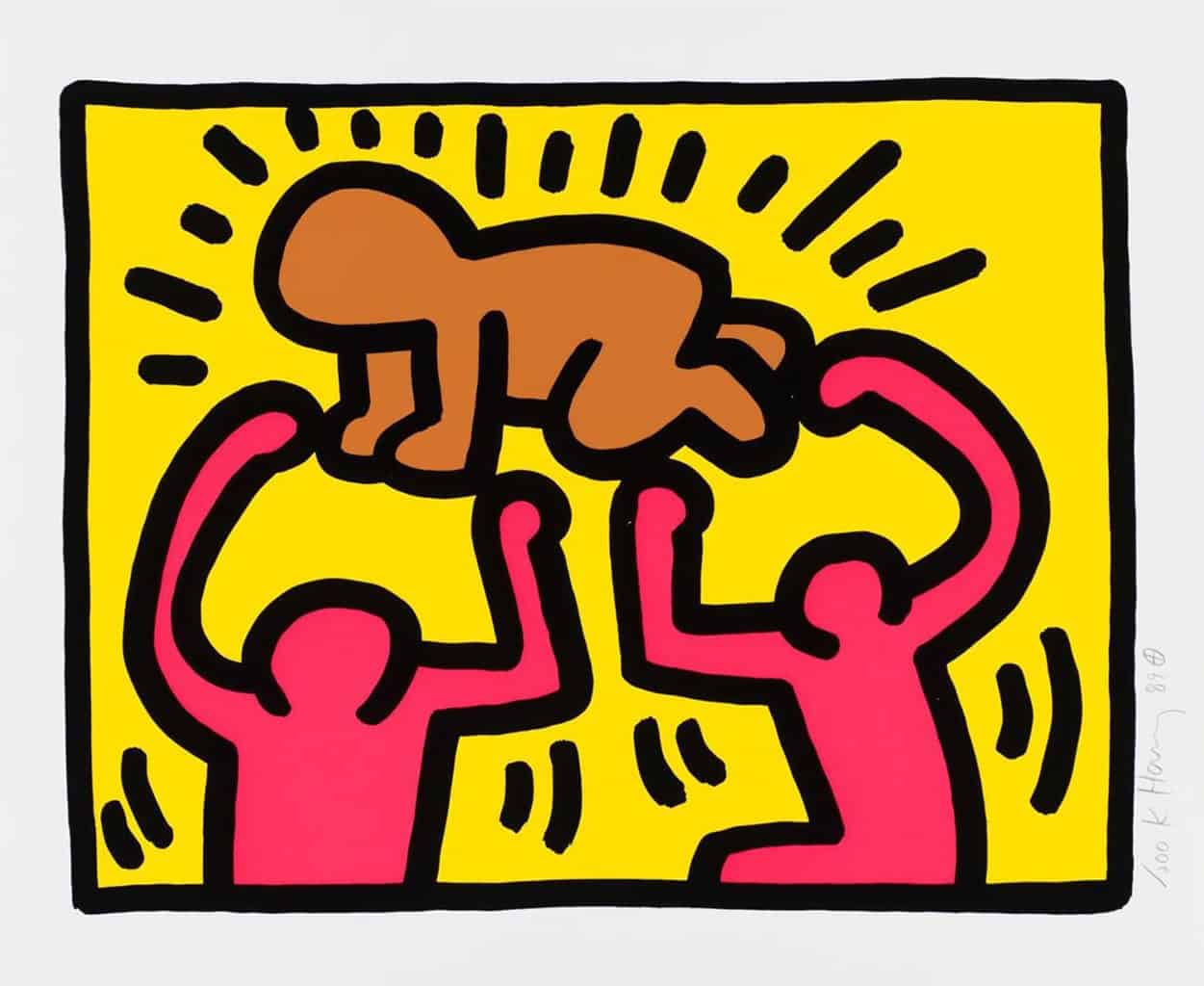
While many recognize the glowing infant, few understand how its joyful origins eventually shifted into a darker narrative. This figure acted as a central pillar of Haring’s visual language throughout his career.
The Radiant Baby Meaning in Early Works
In his initial years, Haring used this symbol to signify purity, innocence, and a bright future. The lines radiating from the baby suggest a positive “life force” that can change the world.
This is the core of the Radiant Baby meaning, representing a fresh start for humanity without the corruptions of adulthood. It served as a visual signature that brought optimism to the gritty New York subway stations.
Transformation During the AIDS Crisis
The narrative changed drastically when Haring faced his own mortality. After his diagnosis in 1987 and 1988, the once-glowing infant took on a heavy and somber weight.
Haring began to depict the baby covered in dark spots. These represented Kaposi’s sarcoma lesions, which were the visible markers of the AIDS virus.
This shift turned a symbol of hope into a tragic reflection of his own depleting life force. It became an ominous warning about the epidemic stealing young lives.
- The spotted baby symbolized Haring’s personal loss of innocence and health.
- The design warned others of the “stay-away” feeling associated with the infection.
- Haring connected this figure to Angel imagery to represent the space between life and death.
- The altered symbol criticized society’s failure to protect vulnerable youth.
The Barking Dog: Power, Authority, and Rebellion
Among Haring’s many icons, the canine figure stands out as a stark warning about the nature of control. This symbol often represents the police, government, or any entity that holds power over the individual. It serves as a visual shout that demands the viewer’s immediate attention.
Understanding the Haring Barking Dog Symbol
The Haring barking dog features thick, bold outlines that give the figure a heavy and threatening presence. Haring created this imaginary representation to mirror authoritarian governments and those who demand obedience. These dogs do not just sit; they bark aggressively to communicate a strong social message.
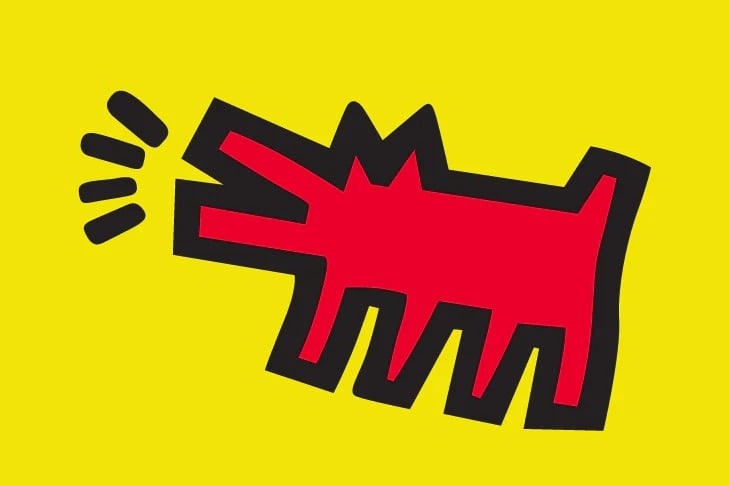
The simple design allows the symbol to communicate complex political commentary quickly. By using such a recognizable animal, Haring asks a vital question. Should you always trust authority figures?
Protection Versus Oppression
This icon possesses a dual nature that reflects the tension between safety and fear. On one hand, a dog can act as a loyal guardian or protector of the community. On the other hand, it represents oppression and aggression when used by those in charge to intimidate others.
Haring used this symbol to give a voice to dissent against various injustices in the 1980s. It captures the barking of authority trying to maintain a strict social order. Simultaneously, it represents the “barking back” of the people in open rebellion against unfair systems.
Dancing Figures: Energy, Unity, and Universal Humanity
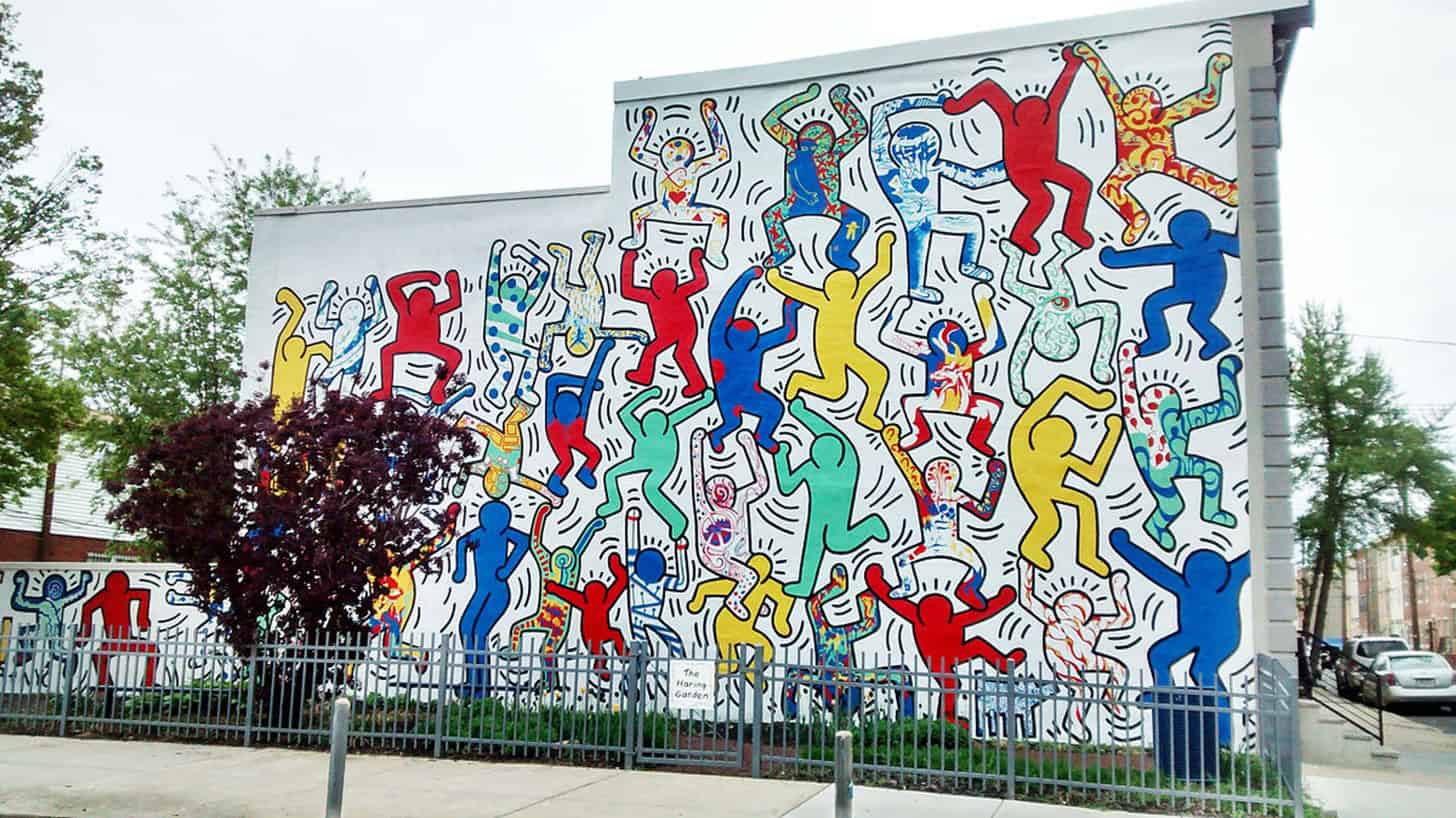
Keith Haring used rhythmic, moving silhouettes to bridge the gap between high art and the pulse of the streets. These figures express pure joy and freedom through simple yet dynamic outlines. By using these shapes, he created a universal language that speaks to people of all backgrounds and ages.
The silhouettes often appear in large murals and small sketches alike. They represent a vision of a harmonious world where people connect without barriers. This continuous dialogue with his audience turned complex social themes into accessible art for the masses.
Keith Haring Figures as Pop Art Iconography
Haring’s work transformed basic human forms into Pop Art iconography that lived on subway walls and gallery canvases. By stripping away specific facial features, he made the figures relatable to everyone regardless of race or gender. This intentional simplicity allowed his message to spread rapidly through 1980s New York culture.
These icons functioned as a visual shorthand for the human spirit. They stood alongside symbols like the Radiant Baby to define a new era of public art. Today, these figures remain some of the most recognizable images in the world of contemporary art.
Movement as Social Commentary
The motion in these drawings serves as a powerful message of unity and collective energy. Haring’s figures often intertwine or support one another to showcase his philosophy of mutual aid. This visual style communicates social responsibility through the act of dancing and physical connection.
The energy of the figures reflects the vibrant life found in street culture, disco scenes, and the LGBTQ+ community. Haring used these movements to offer an alternative vision of connection during a decade marked by deep social divisions.
- United Vision: Figures represent a humanity that transcends race, class, and nationality.
- Collective Energy: Movement celebrates the vitality of community and shared celebration.
- Mutual Support: Intertwined limbs symbolize the importance of social responsibility and care.
- Cultural Pulse: The rhythm of the lines connects the artwork to the energy of 1980s New York.
The Three-Eyed Monster, Flying Devil, and Angel: Capitalism, Death, and Transcendence
Beyond the joyful dancers, Keith Haring used a more ominous set of symbols to critique the social ills of his time. His visual language didn’t just celebrate life; it also exposed the vulnerabilities of the human condition. By using monsters and spirits, he tackled the invisible forces that controlled 1980s society.
The Three-Eyed Monster and 1980s Greed
The Three-Eyed Monster stands as a stark warning against unchecked greed. Haring created this figure to represent the rampant capitalism that defined New York in the 1980s. This creature often appears alongside the Flying Devil, which symbolizes the profane and the corrupting nature of material power.
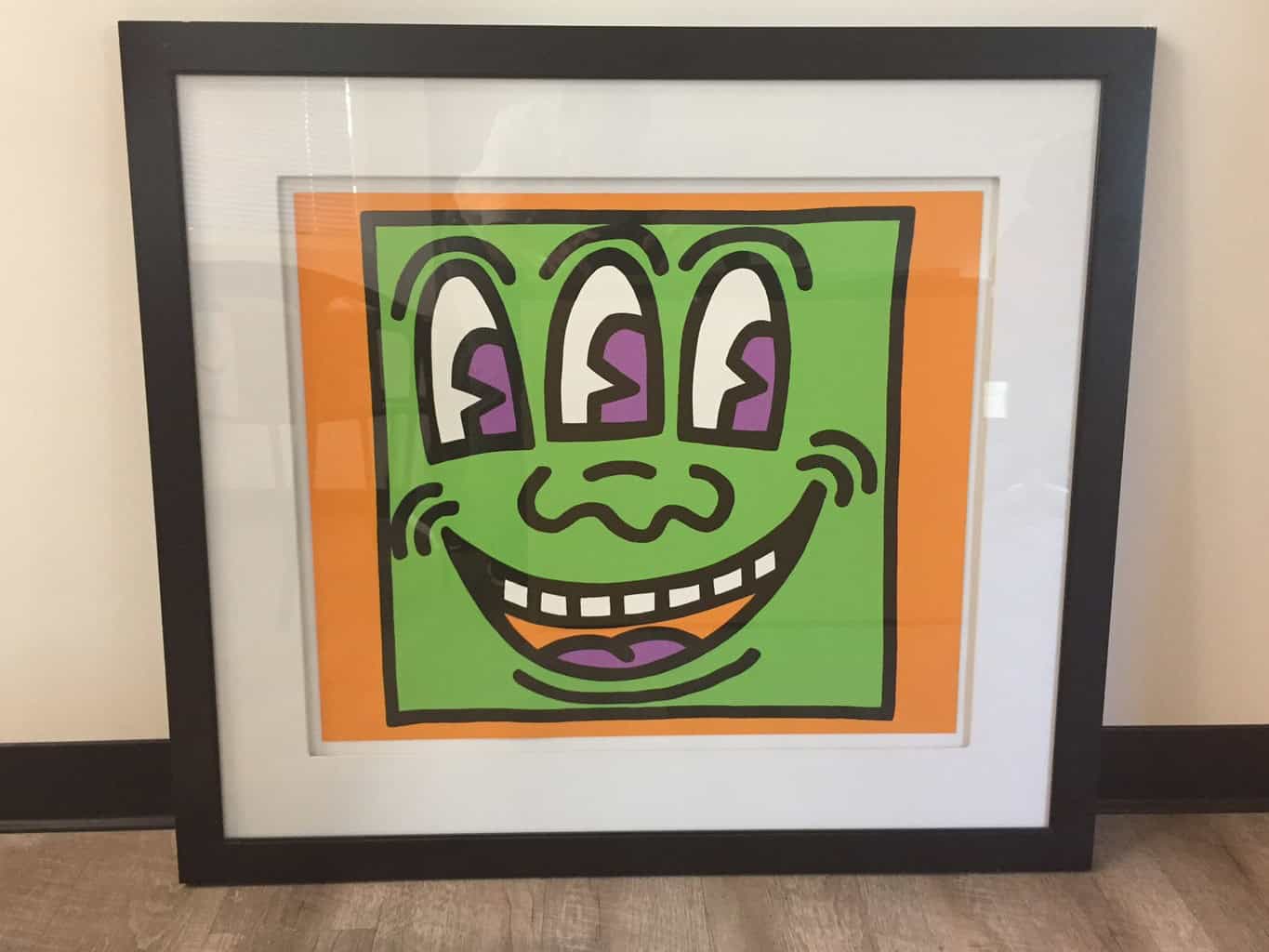
Angels and Devils in Haring’s Work
Haring’s work often balanced the divine with the demonic to explore human nature. The Angel symbolizes the thin line between life and death, a theme that became tragically relevant during the AIDS epidemic. These figures remind viewers of the spiritual transcendence possible even in times of great suffering and loss.
Figures with X’s: Targeting and Emptiness
Figures marked with an “X” or a hole through their middle reveal a profound spiritual void. This emptiness suggests a lack of humanity caused by materialism and social oppression. Haring used these shapes to show how people lose their souls to external pressures.
- Figures with raised hands signal a “don’t shoot” posture, showing they feel threatened by forces beyond their control.
- The symbols suggest that authority figures and rigid social structures act as the real virus in society.
- Ignorance and bigotry pose a greater risk to the average person than the symbols themselves.
- Even his most ominous imagery served to awaken consciousness and inspire resistance against injustice.
| Symbol | Primary Meaning | Social Context |
|---|---|---|
| Three-Eyed Monster | Capitalist Greed | 1980s Consumerism |
| Flying Devil | The Profane | Corruption of Power |
| Figure with X | Internal Emptiness | Spiritual Void |
Preserving Haring’s Bold Lines: Why Print Quality Matters
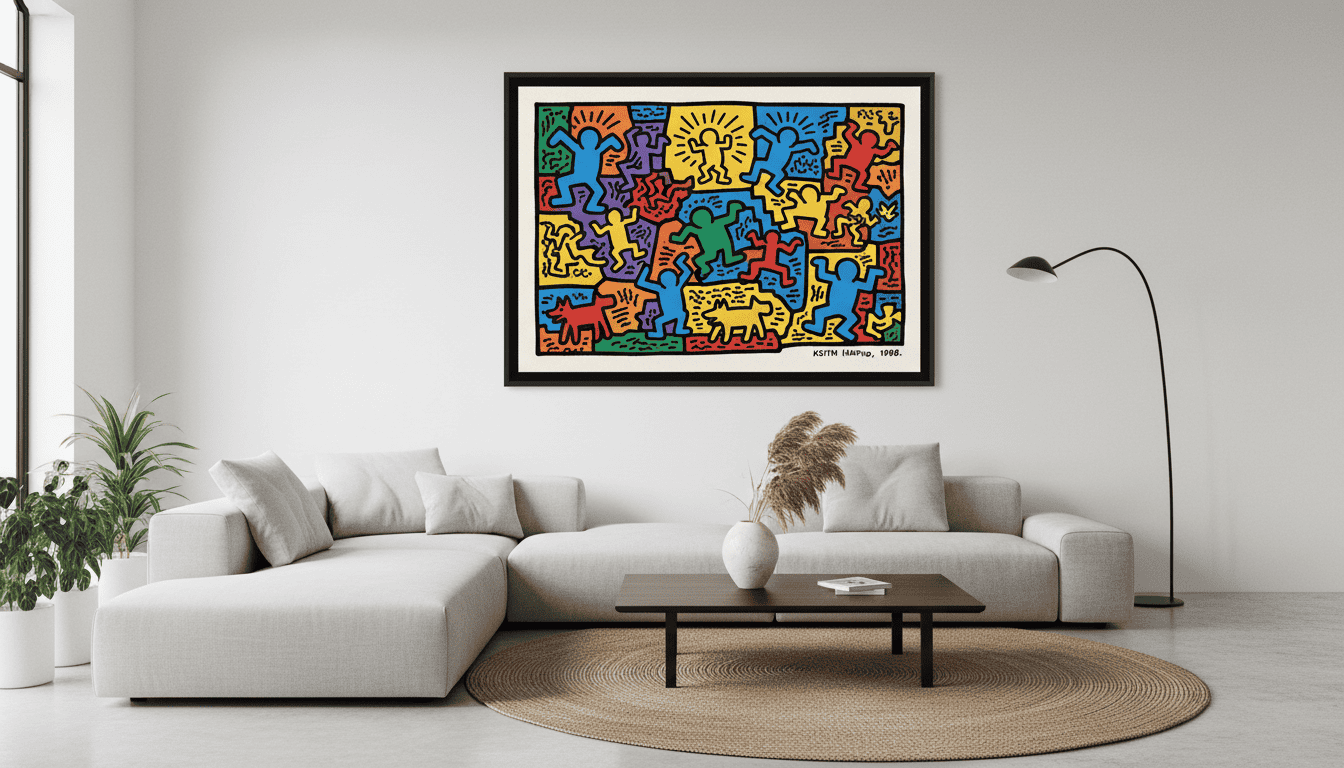
Preserving the kinetic energy of Keith Haring’s original drawings requires a commitment to superior print quality. The true artistic power of his work resides in the thickness and urgency of his bold lines. Inferior reproductions often lose the consistent weight and deliberate geometric shapes that define his iconic style.
At Poppins Shop, our Saigon-based atelier brings 10 years of experience to every piece we produce. We understand how professional printing affects the integrity of haring iconic art and his contemporaries, such as Andy Warhol. High-quality techniques maintain the visual impact Haring intended for public spaces.
The consistent weight of his lines communicated certainty and social messages during the artists’ life. Every stroke demanded immediate attention to important human issues. Poor prints diminish the legacy he created before his death at the young age of 31.
Ready to bring these symbols home? Explore our curated collection of Keith Haring prints that honor the artist’s vision with museum-quality unbroken lines.
The Enduring Power of Keith Haring symbols
Keith haring transformed the streets of New York into a canvas for a revolutionary visual language. He turned complex social issues into clear, bold images that everyone could understand immediately.
His symbols remain famous across the world today. These iconic images allow art to communicate deep messages of hope and rebellion across different cultures and generations.
At Poppins Shop, we use our decade of experience among artists to help you decode this unique language. Understanding these messages transforms a simple print into a powerful piece of historical social commentary.
By bringing these works into your home, you keep his democratic vision alive. Quality prints ensure these important lessons continue to inspire and educate everyone.
Art That Breathes Life Into Your Walls
At Poppins Shop, we believe your home should be a reflection of your unique perspective. Whether you’re drawn to the energetic lines of Keith Haring or the deep textures of a hand-painted canvas, our pieces are crafted in our artisan studio using museum-grade materials designed to last a lifetime. Experience the perfect blend of gallery-quality artistry and accessible luxury, delivered with care from our studio to your doorstep.
FAQ
What inspired the creator’s unique visual language?
What does the glowing infant represent in his pieces?
Why does the canine appear so often in these designs?
How did the local environment impact his early career?
What was the impact of the health crisis on his late pieces?
How did his peers influence his artistic direction?
