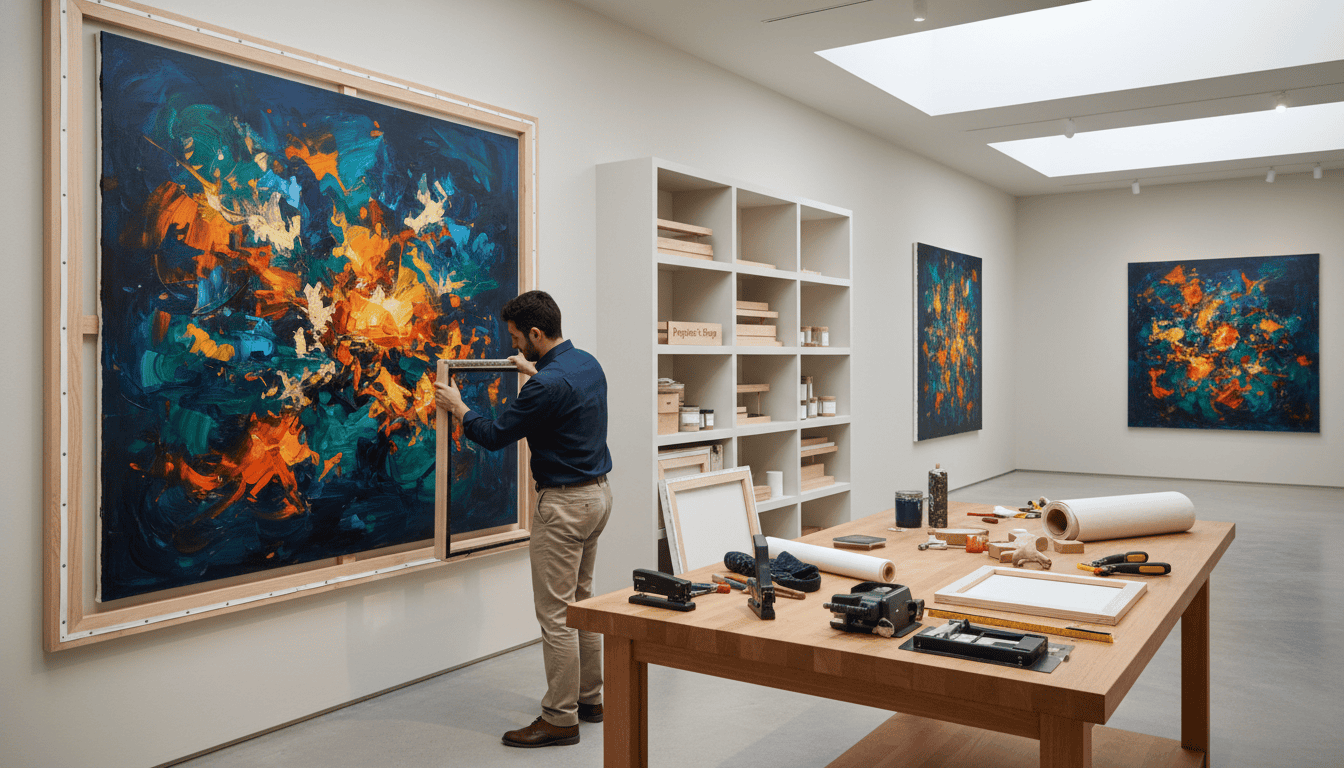
Forget the cheap plastic posters that peel at the corners. True curation needs the heavy, tactile feel of gallery-weight materials. At Poppins Shop, we love the rich textures and archival cotton canvas.
Our studio has high standards for every hand-painted wall art piece. We offer 100% manual, custom oil interpretations that honor the original master’s brushstrokes. This ensures your investment in a large painted wall art canvas a timeless centerpiece, not a disposable decoration.
Creating a large-scale work requires structural skill to prevent wood from bending. Stretching fabric on wood frames is an old technique. We use traditional steps to keep our studio collection beautiful and tough.
Key Takeaways:
- Preparation is Key: Proper stretching techniques prevent structural warping over time.
- Material Quality: Using archival cotton ensures the work remains a durable heirloom.
- Artisan Touch: Manual oil interpretations capture the authentic soul of the original master.
Why Canvas Warping Destroys the Integrity of Hand-Painted Wall Art
The quality of the canvas and how it’s stretched are key for the artwork’s life. Hand-painted wall art is more than colors on a surface. It’s a structure that must last over time. If it fails, the artwork’s beauty starts to fade.
Using canvas for painting goes back to ancient times. Artists have stretched fabric over wood frames for centuries. At our studio, we use archival cotton canvas to keep every brushstroke in place.
The Physics of Tension and Humidity in Large-Format Canvases
Big artworks are very sensitive to changes in the environment. The archival cotton canvas expands and contracts with humidity. This constant tug can warp the fabric and the frame.
A bad frame can’t handle these forces. This leads to canvas warping, where corners lift off the wall. We follow strict tension rules to avoid this in our studio.
Humidity is a big enemy of stability. Without the right materials, a big canvas will warp. We choose materials that fight against these changes.
How Warping Compromises Brushstroke Preservation and Visual Flatness
A warped canvas does more than just look bad. It stresses the paint, causing tiny cracks in hand-painted wall art.
This warping also changes how light hits the surface. Instead of smooth colors, you see shadows and highlights. These distortions take away from the artist’s vision.
Over time, these cracks can make paint flake off. Keeping the surface flat is key to preserving the brushwork. We stretch the canvas tight to protect the paint for decades.
The Hidden Cost of Structural Failure in Heirloom-Quality Art
Choosing cheap materials can make a piece disposable, not a lasting treasure. When a piece fails, fixing it can cost more than buying a new one. We aim to create lasting family heirlooms that avoid these problems.
The difference between a decorative object and a masterpiece often lies in the invisible engineering beneath the paint.
Low-quality frames use thin wood and fake fabrics that warp easily. These materials can warp a canvas in just a few years. Using archival cotton canvas helps avoid this heartbreak.
| Feature | Archival Cotton Canvas | Mass-Market Synthetic |
|---|---|---|
| Dimensional Stability | High; resists permanent twisting | Low; prone to sagging |
| Paint Adhesion | Superior mechanical bond | Poor; risk of delamination |
| Longevity | Heirloom quality (100+ years) | Temporary (3-5 years) |
| Moisture Response | Controlled expansion | Unpredictable warping |
The Foundation Layer: Selecting Archival Cotton Canvas Over Synthetic Alternatives
The base of hand-painted wall art is crucial before the first brushstroke. We see the canvas as the art’s skeleton. A weak foundation can ruin the entire piece.
At Poppins Shop, we choose only the best materials for our art. We use archival cotton canvas for its quality and durability. This canvas is perfect for paint to stick to well.
Many cheap products use synthetic alternatives like polyester to save money. These materials feel cold and lack the real feel of art. Over time, they can become weak or fail to hold paint well.
Natural fibers, like cotton, breathe and move with the air. Using archival cotton canvas lets the art change shape without losing its form. This is key for big pieces that face changing humidity.
Studies show that a solid support is best for canvas paintings. It keeps the art safe from damage like cracks and peeling. We focus on these details to protect your art for years.
“The foundation of a painting is as critical as the pigment itself; without a stable ground, the art is merely temporary.”
We don’t believe in throwing away art like it’s disposable. We see hand-painted wall art as a lasting family treasure. By avoiding cheap synthetic alternatives, we make sure each piece stays beautiful and strong.
| Feature | Archival Cotton Canvas | Synthetic Alternatives |
|---|---|---|
| Durability | Long-lasting; resists tears. | Gets brittle over time. |
| Paint Adhesion | Paint sticks well to it. | Surface is too smooth for thick paint. |
| Environmental Response | Expands and contracts naturally. | Stays the same; can sag in heat. |
| Texture | Feels rich and natural. | Feels uniform and plastic-like. |
Engineering a Large Painted Wall Art Canvas That Resists Warping for Decades
Making oversized art strong isn’t by chance. It comes from choosing the right materials and design. Our studio has a special area for big projects. It has professional lighting and big worktables.
We use strong sawhorses to keep the frame straight during setup. This is key for a big canvas.
A large painted wall art canvas needs a strong base. We prepare each surface in a controlled room. This helps prevent early damage.
This careful prep makes sure your hand-painted wall art looks perfect when it arrives.
Why 320 GSM Italian Cotton Canvas Provides Superior Dimensional Stability
We pick 320 GSM Italian cotton canvas for its strength. The “GSM” shows the canvas’s weight and thickness. A heavier canvas like 320 GSM helps it stay flat for years.
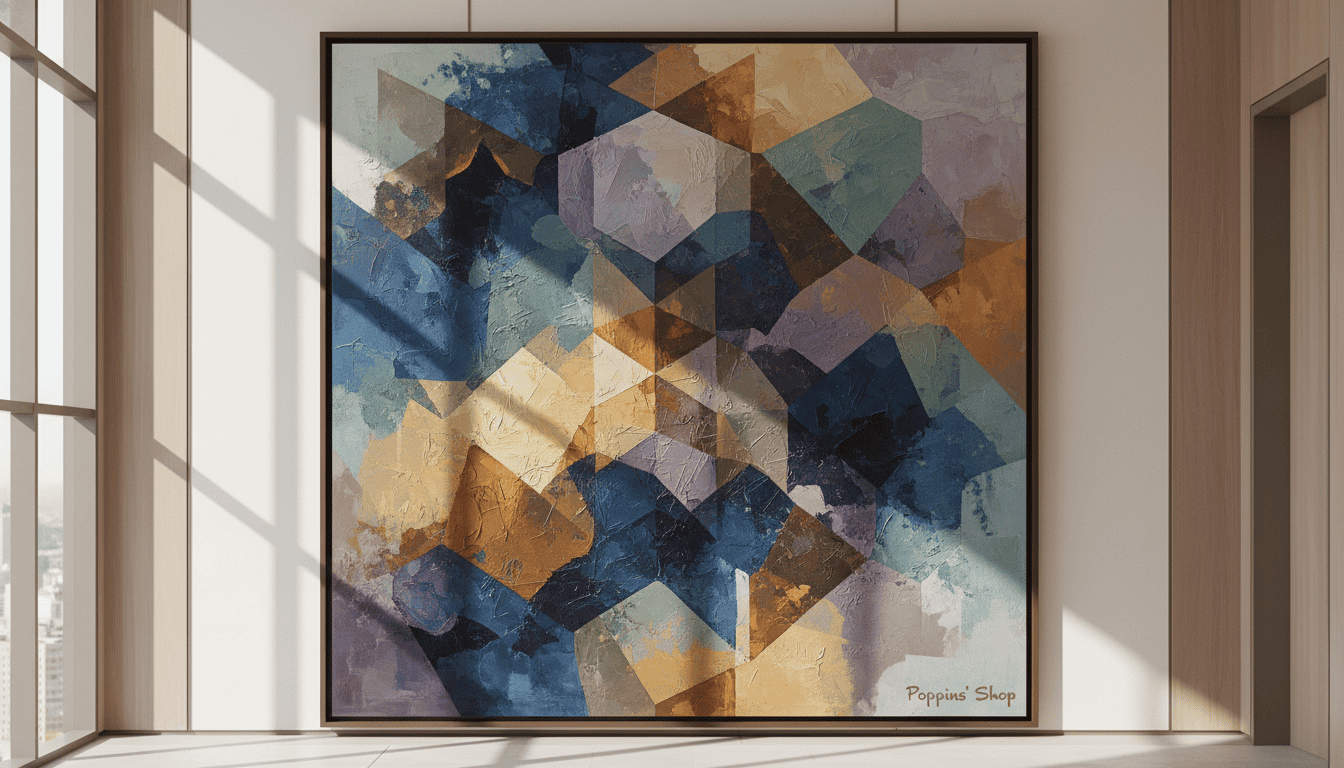
Italian cotton is known for its strong fibers. These fibers don’t stretch too much or get brittle. This keeps the canvas tight from edge to edge.
“The longevity of a painting is inextricably linked to the mechanical properties of its support.”
The Role of Fabric Weave Density in Preventing Stretcher Bar Imprinting
Low-quality canvases can show the frame’s outline. This is because the weave is too loose. Our large painted wall art canvas has a tight weave.
This tight weave hides the frame and lets the artist focus on details. It also makes the canvas smooth for painting.
Moisture Management Properties of Natural Fiber Versus Polyester Plastic Sheets
Moisture harms art over time. We choose 320 GSM Italian cotton canvas because it lets the art “breathe.” This stops mold and keeps the fibers from expanding.
Polyester sheets trap moisture, causing problems. Natural cotton is best for lasting hand-painted wall art.
| Feature | 320 GSM Italian Cotton | Standard Synthetic Polyester |
|---|---|---|
| Dimensional Stability | High; resists sagging | Moderate; prone to stretching |
| Breathability | Excellent; natural airflow | Poor; traps moisture |
| Visual Texture | Refined; archival quality | Artificial; plastic-like sheen |
| Longevity | Decades (Heirloom Grade) | Short-term (Disposable) |
The Five-Week Studio Method: Professional Stretching and Tensioning Techniques
Making a large canvas flat is a big challenge. We solve it with a five-week plan. We think stretching and tensioning the canvas is key for its lasting quality.
We believe a painting’s quality depends on its tension. We avoid quick fixes to keep your art looking great for years.
Pre-Stretching Preparation and Canvas Conditioning Protocols
Before we start, our team gets the archival cotton canvas ready. They draw lines on the fabric to show its grain.
This helps keep the fabric straight and even. Then, we let the canvas adjust to our studio’s environment. This step helps the fabric settle before we stretch it.
Corner Folding Geometry That Eliminates Bulging and Puckering
Corners are the weak spots in hand-painted wall art. Most places just bunch the extra fabric, causing bumps.
We use a special corner folding method. It spreads out the fabric evenly, making the canvas smooth against your wall.
Our mitered tucks give a sharp, professional edge. This detail makes your art stand out, unlike a common poster.
Staple Placement Patterns for Even Tension Distribution Across Large Formats
We use a “center-out” staple pattern for a smooth surface. We start in the middle and work our way to the corners.
This method keeps the fabric from moving during stretching. We use a top-notch staple gun to attach the archival cotton canvas just right.
Even tension is key to avoid the “ghosting” effect. We check the fabric’s tension at every step to keep it balanced.
The Curing Timeline: Why Rushed Production Guarantees Future Warping
Changes in humidity and temperature affect the canvas. Our five-week method includes a curing period in a controlled space.
Quick production leads to warping or sagging in the first year. We adjust the tension several times as the fibers settle.
This careful timeline lets our techniques work fully. We only ship art that meets our strict standards.
| Feature | Our Five-Week Studio Method | Mass-Market Factory Method | Benefit to Collector |
|---|---|---|---|
| Fiber Alignment | Weave-matched pencil guides | Random mechanical pulling | Prevents diagonal skewing |
| Tensioning Pattern | Manual “Center-Out” diamond | Uniform machine pressure | Eliminates corner puckering |
| Curing Period | 35-day climate stabilization | Zero (Immediate shipping) | Ensures permanent flatness |
| Corner Geometry | Precision mitered tucks | Bulk-stapled overlaps | Smooth, professional profile |
What Mass-Market Poster Factories Won’t Tell You About Canvas Construction
Mass-market poster factories focus on making lots of posters fast. They treat art like a product, not a piece of art. They use machines to stretch thin polyester over soft wood frames quickly.
This fast method of canvas construction misses the human touch. Without manual adjustment, the fabric can sag or pull unevenly. This is why budget posters often lose their sharpness in just a few months.
These factories also use cheap materials that can warp or delaminate. They use low-cost adhesives and synthetic blends that don’t handle temperature changes well. These shortcuts save money but hurt the hand-painted wall art experience for buyers.
At Poppins Shop, we know the quality of the canvas and how it’s made is key. We reject the idea of “fast art” and focus on using materials that last. Our studio sticks to archival materials that can stand the test of time.
Our hand-painted wall art uses old-school techniques that mass-market places can’t match. We stretch each piece by hand to get the tension just right. This careful process stops the structural problems seen in mass-made art.
| Feature | Mass-Market Poster Factories | Our Artisan Studio |
|---|---|---|
| Primary Material | Synthetic Polyester Blend | Archival Cotton Canvas |
| Canvas Construction | Automated Machine Stretch | Hand-Tensioned Mastery |
| Durability | Prone to Warping | Heirloom Quality |
“Quality is never an accident; it is always the result of high intention, sincere effort, intelligent direction and skillful execution.”
We make hand-painted wall art that lasts for generations. By avoiding the problems of mass-market poster factories, we make sure your investment stays valuable. Your walls deserve the strong, lasting beauty that only expert canvas construction can give.
Building Modern Family Heirlooms With the Art of the Atmosphere
Stretching canvas on a solid wood frame is a centuries-old technique. It makes beautiful and durable artworks. Our studio sticks to these traditional standards to keep the fabric tight and the paint safe.
We use archival cotton canvas for every piece. This natural material keeps the artwork stable. Unlike cheaper materials, it lasts for years without warping or losing its shape.
Every piece from Poppins Shop is a mix of luxury craft and your home. We make modern family heirlooms that will be loved for generations. Our focus on quality ensures your artwork stays vibrant and flat, becoming a lasting part of your family’s history.
Bringing the Gallery Home
Skip flat, mass-produced plastic prints. Elevate your walls with the tactile depth and human presence of genuine painted wall art. Each piece is manually crafted on heavy 380 GSM archival Italian cotton canvas over a meticulous 3-to-4-week studio timeline. Experience the art of atmosphere at an honest, direct-from-studio valuation.
